


Social Sciences and Humanities > Home > Journal
CT - ISSN 2976-5897 - © ISTE Ltd
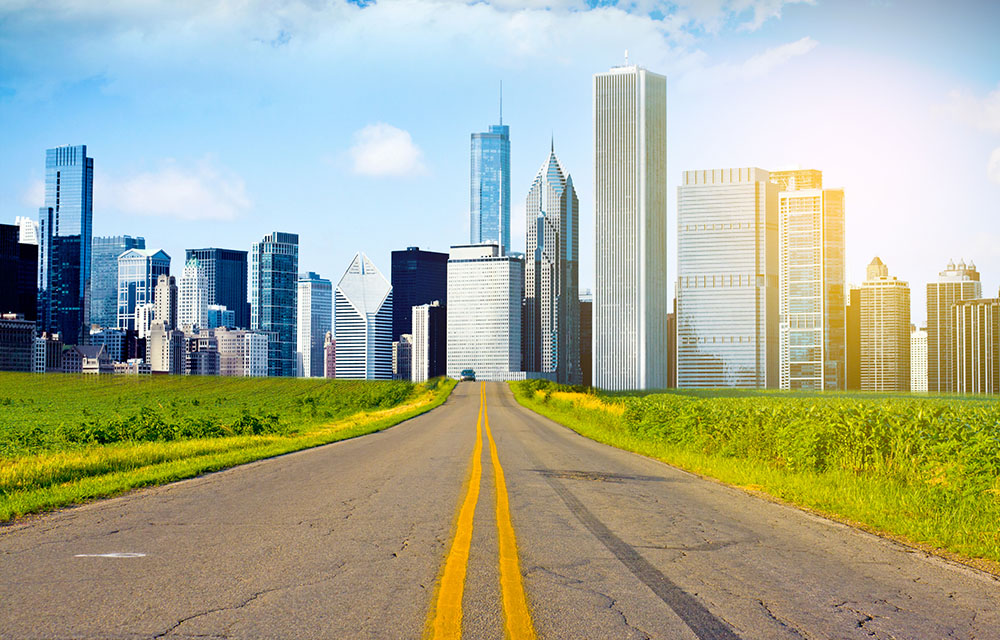
City and Tourism debates the city and its tourism, the city and its leisure, and the city and its changes. It is on the topic of urban tourism, which has become the world’s leading form of tourism and, according to conventional classifications, includes international tourists, business tourists and day-trippers.
This scientific journal publishes original articles, special issues, book reviews, interviews and critical commentary on city tourism, a scientific subject which is part of the globalization process. This journal thus examines our "nomadic planet", where humans travel from city to city, an examination which provides a new practical and theoretical framework to better understand the economic, social, urbanist and cultural processes at play.
This journal examines different meaningful themes through the lens of human and social science. We favor two complementary approaches which together allow us to paint a precise portrait of the tourist city : a marketing approach (economic, communication, management, CSR, branding and governance) and a geographical approach (spatial, human, cultural and environmental).
"Be the stakeholders of city tourism and share your results."
There is no submission or publication fee to enter City and Tourism. Scientific articles are reviewed scrupulously and the identity of the parties is always hidden with a double-blind peer review.
We base our development and notoriety on the quality of our published scientific articles and on our ability to develop debates on the themes of urban tourism and the changing city.
Scientific Board
|
Aurora Pedro Bueno
Dominique Crozat
Edward L. Jackiewicz
Renzo Lecardane |
Marie-Laure Poulot
Sylvie Rouillon Valdiguie
Jean-Paul Volle
|
Cité et tourisme est consacrée à la ville et son tourisme, la ville et ses mutations/recompositions, mais aussi sur les différents loisirs associés aux habitants et aux touristes. Cette revue est née de l’accélération de la pratique du city break - city vacation - city trip - city tour qui se diffuse largement à l’échelle mondiale.
Le city tourism est un objet de connaissance scientifique identifiable, partie prenante du processus de la mondialisation et de l’extension de l’écoumène touristique. La revue prend en compte la multiplication des mobilités touristiques et des modes d’habiter, d’aménager et de promouvoir - gérer - manager la ville, un cadre théorique et pratique permettant de mieux cerner les processus économiques, sociaux, urbanistiques et culturels à l’œuvre.
Deux approches complémentaires sont privilégiées : une approche marketing (économique, communication, management, gestion, gouvernance) et une approche géographique (spatiale, humaine, culturelle, environnementale).
« Soyons les acteurs du tourisme urbain et partageons nos résultats »
La revue propose une politique scrupuleuse d’examen des articles scientifiques. L’identité des parties est toujours cachée avec une évaluation par les pairs en double aveugle.
Conseil scientifique
|
Aurora Pedro Bueno
Dominique Crozat
Edward L. Jackiewicz
Renzo Lecardane |
Marie-Laure Poulot
Sylvie Rouillon Valdiguie
Jean-Paul Volle
|
This article examines the rollout of a cycling route in France and the tourism logics mobilized in the context of a renewed tourism landscape shaped by emerging, highly valued models – sustainable tourism, slow tourism, and creative tourism. The focus is on a relatively young and still-evolving itinerary, La Seine à Vélo, which is being developed through the joint efforts of several local authorities and celebrates its 10th anniversary. Drawing on an exploratory qualitative study based on 14 semi-structured interviews, field observations, and document analysis, we shed light on the development of a cycling route that positions itself as a creative and sustainable model. Our analysis reveals a growing interest from public policies. By aiming for potential economic benefits, they have found new ways to distinguish themselves. However, the development of this approach is hampered by fragmented and sectoral governance.
Tourism, heritage and crafts are intertwined to shape the tourism economy, culture and identity of territories. This third volume of Cité et Tourisme, City & Tourism explores these themes through two European studies exploring the links between urban cultural tourism and crafts. Caught between modernization, globalization and health crisis, territories benefit from the opportunities offered by tourism and events, while being forced to adapt. The importance of preserving know-how to maintain authentic local production requires adapting the means of training and craft sales. In this issue, heritage is associated with sustainable mobility and the rehabilitation of historic buildings. The image of the destination is a challenge for European metropolises that must reconcile the fact of being ever more attractive while being respectful of their environment, their history and local craft resources. Finally, innovation and training are the pillars of the return to authenticity in a redesigned heritage framework as for the restoration and reopening of the Cathedral of Notre-Dame de Paris in December 2024 showing the heritage and sociological stake of national pride. Cultural identity is valued and by ricochet becomes an instrument to think about new sustainable mobility and the fact of rethinking the financing of architectural rehabilitations. This volume brings new issues and analyses concerning the risks and the relevance of sustainable solutions committed to tangible and intangible heritage, this for a local development of small towns and the emergence of a circular artisanal economy generating economic growth.
This article looks at the changes taking place in the urban crafts, against a backdrop of a drastic increase in cultural tourism in Cordoba (Spain), spurred on by its four UNESCO nominations. The city also boasts a jewellery industry that has been the city’s flagship since at least the Middle Ages. After summarizing the development of jewellery craft, I show the fragility of this intangible heritage, which is supported by local players, and the delicate relationship between the craft, which is struggling to survive, and luxury industrialization, while highlighting the difficulties faced by these professionals in the face of tourism, which is changing the physiognomy of the city and the activities of these craftsmen.
The article examines territorial and urban development through the prism of the “European Capital of Culture” label, with a particular focus on the tourism strategy, and in particular the adaptation of cultural tourism in a context of ecological transition. The candidacies of four French cities for the title of European Capital of Culture for 2028 are analyzed: Rouen, Bourges, Clermont-Ferrand and Montpellier. For these medium-sized and smaller cities seeking to assert themselves on an international scale, a new urban imaginary is proposed by those involved in the bid. In the age of the Anthropocene, the tourism narrative is part of this dynamic, with a common positioning for the four cities, through the notion of “slow tourism” and a focus on natural heritage. The case of the winning city in the national competition is explored in greater depth : Bourges and its cultural project based on the idea of a capital on a “human scale” outside the dynamics of metropolization. This discourse, rooted in the concept of “happy frugality”, raises questions about the urban policies implemented and the repositioning of the tourism offer.
Editorial Board
Editor in chief
Patrice Ballester
Viaticus Tourism & Hospitality School
[email protected]
Co-Editors
Si Mohamed Ben Massou
ENCG/Université Cadi Ayyad de Marrakech
Maroc
[email protected]
Elsa Devienne
Northumbria University
Angleterre
[email protected]
Fatima Zahra Guertaoui
ENCG Marrakech
Maroc
[email protected]
Erick Leroux
Université de Paris 13
Sorbonne Paris Cité
[email protected]
Charly Machemehl
Université de Rouen Normandie
[email protected]
Gabriele Manella
Université de Bologne
Italie
[email protected]
Christine Petr
Institut de Management de Bretagne Sud
[email protected]
Juan Ignacio Pulido Fernandez
Université de Jaén
Espagne
[email protected]